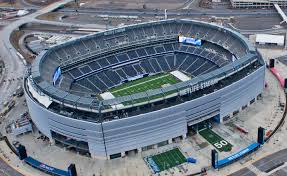
The Browns are preparing to face the New York Jets with a chance to improve to 4–1 for the first time since 2020. It’s a major road test outside Cleveland—and, ironically, outside New York.
Most fans know the Jets and Giants play in New Jersey, but fewer know how two teams bearing the New York name ended up playing across the Hudson.
To understand why, all you have to do is follow the money.
The Giants: A Football Team in a Baseball World
The Giants spent their first three decades at the Polo Grounds in Upper Manhattan before moving to Yankee Stadium in 1956. But moving in with the Yankees meant playing by someone else’s house rules.
The stadium’s name made it clear who was the boss. The Giants were forced to pay 15% of their ticket receipts in rent and received no share of parking or concession revenue. The Yankees’ baseball schedule also took priority, limiting the Giants’ control over their home games.
New Jersey offered a more attractive arrangement: a football-first stadium with approximately 75,000 seats and access to revenue streams the Giants were missing. While their rent would remain largely the same, additional seating and a share of concessions and parking made the move far more financially appealing.
The Giants announced their decision in 1971 and began playing at Giants Stadium in East Rutherford in 1976. They were not simply escaping an expensive address. They would no longer have to play second fiddle to the Yankees.
The Jets: Different Stadium, Same Problem
The Jets’ path began at the same Upper Manhattan stadium the Giants had once called home. Originally known as the Titans of New York, the AFL franchise played at the run down Polo Grounds beginning in 1960, became the Jets in 1963, and moved to Shea Stadium in Queens in 1964.
Shea offered a fresh start, but sharing their home with the New York Mets put the Jets in a familiar position: a football team taking a back seat to baseball. The Mets’ schedule often forced the Jets to begin their season with several road games, a problem that could become even worse when the Mets reached the postseason.
Looking for greener pastures across the Hudson, Giants Stadium offered more seating and greater earning potential. Projected as approximately $500,000 per game compared with $275,000 at Shea—a potential increase of $225,000 per game made the deal all the more attractive.
The Jets finally made the move in 1984, joining the Giants in New Jersey. The two teams now shared a home, but the equal partnership associated with MetLife Stadium was still decades away. That all changed in 2010.
MetLife: A Shared Home on Equal Terms
The Giants and Jets moved into MetLife Stadium through a joint venture in which each team held a 50% stake. After years of sharing facilities with baseball teams—and then sharing Giants Stadium—they finally had a new home built around both franchises.
MetLife offered a new chapter in a story that had begun decades earlier. New York expensive living and elitism drew both teams to New Jersey. The irony is not that these teams have nothing to do with New York. It’s that the two franchises bearing the city’s name had an inherently “New Yorker” story.
New York on the jerseys. New Jersey on the address. Follow the money, and the geography makes a lot of sense.




Leave a Reply